
Key Takeaways
- Understanding the function of each knife type improves cooking efficiency and safety.
- Proper maintenance and storage extend the lifespan of your knives.
- Investing in quality knives tailored to your cooking habits enhances your culinary experience.
Equipping your kitchen with the right knives is essential for cooking efficiently and safely. With numerous knife shapes and sizes available, selecting the ideal tool for each task can be overwhelming. Understanding which knife to use—and why—makes meal preparation smoother and ensures cleaner, more precise cuts, while also reducing the risk of injury. As you build your collection, it’s also important to learn how to take care of knife to keep them sharp and reliable for years to come.
Every type of knife has a purpose, from basic meal prep to specialized culinary techniques. Investing in high-quality knives tailored to your cooking style goes a long way in enhancing both the results and enjoyment in the kitchen. A good set of knives will not only improve your efficiency but also protect your hands and ingredients from slips and damage. Knowing when to use a specific blade takes away the guesswork and gives you more control over every dish you prepare.
Proper maintenance and storage are just as important as picking the right knife. Safe storage options, such as magnetic strips or knife blocks, reduce wear and tear on the blades, while routine honing and sharpening help retain their edge. This knowledge is especially helpful for anyone looking to enhance their culinary skills and enjoy stress-free meal preparation.
Different dishes and ingredients require particular approaches and blades for optimal results, whether you’re slicing crusty bread, peeling fruit, or carving a roast. Familiarity with the essential and specialty knives means you’re always prepared for any kitchen task. For a comprehensive primer,
Essential Knives and Their Uses
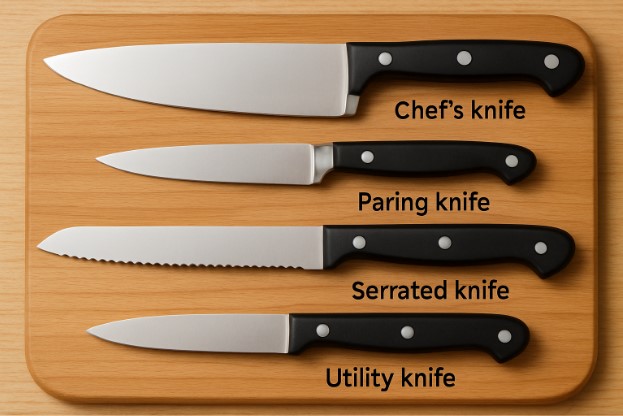
Every kitchen benefits from a few foundational knives, each suited for common cooking tasks:
- Chef’s Knife (8 to 10 inches): Universally recognized for its versatility, this knife excels at chopping, slicing, dicing, and mincing. Its broad blade and slightly curved edge facilitate a rocking motion, making quick work of herbs, vegetables, and proteins.
- Paring Knife (3 to 4 inches): Small but mighty, a paring knife is perfect for intricate work like peeling fruits, deveining shrimp, or segmenting citrus. Its short blade offers unmatched precision for delicate tasks.
- Serrated Knife (Bread Knife) (8 to 10 inches): The saw-toothed edge of a bread knife slices effortlessly through crusty breads, tomatoes, and other foods with tough exteriors but soft interiors without crushing them.
- Utility Knife (5 to 7 inches): This mid-sized knife fills the gap between chef’s and paring knives, ideal for slicing sandwiches, cutting fruits, or trimming excess fat from meat.
Specialty Knives for Specific Tasks
If you routinely cook specific dishes or tackle harder tasks, investing in a few specialty knives will elevate your kitchen repertoire:
- Boning Knife (5 to 6 inches): Equipped with a thin, flexible blade, boning knives are indispensable for removing bones from meat and poultry, allowing for clean separation without tearing the flesh.
- Santoku Knife (5 to 7 inches): As a Japanese alternative to the chef’s knife, the santoku features a straight edge and sheep’s foot tip, making it superb for precise vegetable prep and thin slicing.
- Cleaver: Rugged and heavy, a cleaver can hack through bones and dense vegetables like squash or cabbage and is commonly used in Asian cuisines.
Factors to Consider When Choosing a Knife
Choosing the right knife depends on your needs, preferences, and the kinds of food you prepare most often:
- Blade Material: Knives are typically made from stainless steel (easy to maintain and rust-resistant), carbon steel (ultra-sharp but requires more maintenance), high-carbon stainless steel (which balances sharpness with durability), or ceramic (a lightweight, brittle material).
- Blade Shape and Size: Match the blade’s shape and length to your cutting style. Long blades are ideal for large roasts or melons, while short blades offer detailed control for intricate prep.
- Handle Comfort: Ergonomic, slip-resistant handles reduce fatigue and the chance of accidents. Always choose one that suits your grip and stays secure when wet.
- Maintenance Needs: Some knives need more frequent sharpening and care. If convenience is key, opt for hardy stainless steel varieties. Serious home cooks might prefer more specialized materials that require a bit more attention.
Proper Knife Maintenance and Storage
Even the highest-quality knives need proper care for safety and longevity:
- Regular Honing and Sharpening: Regular honing (not sharpening) keeps the edge aligned for more effective cutting. Actual sharpening, whether using a whetstone or a professional service, restores the blade when it becomes dull.
- Proper Cleaning: Always hand-wash and dry knives immediately after use. Dishwashers can dull blades and weaken handles over time. Discover the importance of appropriate knife care with this comprehensive guide from Consumer Reports.
- Safe Storage: Store your knives safely in blocks, sheaths, or on magnetic strips to prevent both accidents and blade dulling.
Matching Knives to Kitchen Tasks
Using the right knife for each culinary job doesn’t just make prep easier; it ensures even cuts and minimizes accidents:
- Chopping Vegetables: Rely on a chef’s or santoku knife for its ability to handle larger produce and steady, repetitive chopping motions.
- Slicing Meat: A boning knife helps prepare raw meat, while a carving knife ensures smooth, even thin slices for roasts or poultry when cooked.
- Cutting Bread: A serrated bread knife glides through crusty loaves effortlessly, maintaining the internal texture of the bread.
- Peeling and Trimming: Paring knives are unmatched for peeling skins and trimming small ingredients where control is essential.
- Filleting Fish: A flexible fillet knife enables you to work closely along the bones, reducing waste and retaining more meat.
By identifying the strengths of each knife in your kitchen, you can streamline your prep work and achieve better results in your cooking. Smart choices and regular care ensure your knives remain safe, sharp, and ready for any culinary adventure.
Conclusion
Selecting the right knife for each kitchen task is more than a matter of convenience—it’s the foundation of safe, efficient, and enjoyable cooking. When you understand the purpose and advantages of each blade, you gain confidence and precision in every slice, chop, and cut. Pairing the correct knife with proper care and storage habits ensures that your tools stay sharp, durable, and dependable for years to come. Whether you’re a seasoned home chef or just beginning to expand your culinary skills, investing time in learning how to choose and maintain your knives transforms your kitchen experience—turning everyday meal prep into a smoother, more rewarding craft.