
Key Takeaways
-
Contemporary fire systems offer intelligent detection, faster alerts, and automation integrations.
-
IoT and artificial intelligence are transforming monitoring, response, and predictive maintenance.
-
Enhanced systems support overall building management and energy efficiency goals.
-
Shifting regulatory environments accelerate the adoption of next-generation fire safety measures.
Fire safety has evolved dramatically in recent years. No longer limited to simple smoke detectors or manual pull alarms, building protection is now defined by advanced, interconnected systems that enhance response and minimize risk. In today’s rapidly changing world, innovative commercial fire safety solutions Anchorage, AK, are setting new standards for protecting people and property.
Modern fire system technology harnesses smart detection, seamless building integration, and predictive maintenance, making buildings safer than ever and providing real peace of mind for owners, tenants, and visitors. Greater awareness, combined with regulatory guidance, continues to drive the evolution of safety practices across residential, commercial, and public buildings.
Advancements in Fire Detection Technology
Traditional detection, long reliant on isolated sensors and audible alarms, is increasingly replaced by sophisticated multi-sensor and smart systems. Newer devices combine smoke, heat, and carbon monoxide monitoring in a unified platform. This multi-sensor approach not only improves accuracy but also reduces costly false alarms that take emergency resources away from actual threats. Integration with building management systems enables real-time status updates, providing building staff and emergency responders with detailed data to inform optimal evacuation routes and targeted responses.
The use of networked detection devices enables smarter, room-by-room or zone-specific responses. In a fire scenario, such targeted data can be the difference between a swift, safe evacuation and potentially catastrophic delays.
The Role of IoT in Fire Safety
The Internet of Things (IoT) is redefining what fire safety means for modern buildings. Smart detectors and connected devices stay vigilant day and night, continuously monitoring for the slightest changes in air quality or temperature. When a possible hazard is detected, these devices immediately push notifications to occupants and property managers via apps or connected control dashboards. For example, smart smoke detectors allow instant remote notifications, crucial protection even for building managers who are off-site at the time of an incident.
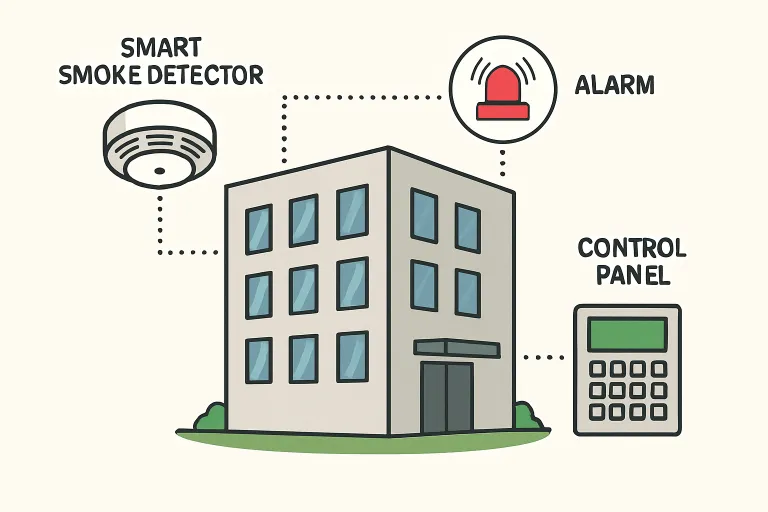
IoT-driven systems also provide predictive maintenance capabilities. By monitoring sensor performance, battery levels, and device compliance, these systems help ensure equipment remains operational at all times. This proactive maintenance can substantially reduce system downtime, keeping every component ready and reliable.
Enhanced Connectivity and Integration
Deep connectivity is central to the latest fire safety approach. Modern fire systems can now communicate with heating, ventilation, and air conditioning (HVAC), lighting, and building access systems. Imagine, for instance, a fire detection system that tells HVAC controls to limit airflow and reduce the spread of smoke while simultaneously unlocking emergency exits and triggering illuminated pathways.
This holistic approach helps safeguard occupants and mitigate property losses. Synchronization of fire alarms with other security systems allows coordinated, rapid responses that are critical in high-occupancy or multi-use buildings. Ultimately, this level of unified design helps streamline the operation and efficiency of entire buildings.
Regulatory Changes Driving Innovation
Building and safety codes continue to evolve, focusing on driving widespread adoption of advanced fire safety measures. Regulatory changes such as the Fire Sprinkler Incentive Act underscore the importance of both new and retrofit fire suppression installations. By providing accelerated depreciation for fire sprinkler improvements, such regulations create financial incentives for building owners to invest in modern life safety systems. These initiatives reduce long-term costs, protect lives, and lessen damage, substantially benefiting the national economy and public health.
Case Study: Modernizing Safety Standards
Communities nationwide are beginning to see tangible improvements from adopting these advanced technologies. In February 2026, Reliable Fire Protection enhanced fire safety in the Cinco Ranch, TX community by installing smart alarm systems with 24/7 remote monitoring and expert support. By upgrading infrastructure in schools, shopping centers, and office parks, this project demonstrates how intelligent detection technology can raise local safety standards and build community resilience against fires.
Future Trends in Fire Safety
Artificial intelligence is poised to become a permanent fixture in the fire safety landscape. AI-powered fire systems analyze vast amounts of data from environmental sensors, surveillance cameras, and historical patterns to identify subtle changes before they escalate into full-blown incidents. This predictive power enables early intervention in hazardous situations, potentially preventing fires before they start.
These emerging technologies mean that building safety will no longer rely only on after-the-fact alarms. Instead, intelligent systems will spot risks even before visible smoke or flame, providing game-changing improvements in how we safeguard public and private spaces. For more information on future safety innovations, see resources from the National Fire Protection Association (NFPA) and Buildings.com.
Conclusion
The evolution of fire systems has redefined what is possible in building safety. By leveraging smart sensors, IoT integration, and AI-driven monitoring, modern fire protection now ensures quicker detection, coordinated building management responses, and proactive maintenance. Regulatory guidance and technological advances are steadily raising the bar, contributing to safer, healthier communities for everyone.