
Key Takeaways
-
Understand the importance of quality marine hardware for boat safety and performance.
-
Learn about different types of marine hardware and their specific applications.
-
Discover maintenance tips to extend the lifespan of your marine hardware.
Table of Contents
-
Importance of Quality Marine Hardware
-
Types of Marine Hardware
-
Material Selection for Marine Hardware
-
Preventing Corrosion in Marine Hardware
-
Maintenance Tips for Marine Hardware
-
Conclusion
When outfitting your boat, selecting the right marine hardware is crucial to maximizing safety, performance, and long-term value. Whether you are replacing old components or starting a new build, understanding the nuances of each hardware type helps protect your investment. Small details, like selecting proper marine hose clamps, can make a big difference in preventing costly failures and ensuring a secure environment for everyone onboard.
Durable hardware resists the punishing impacts of salt water, sun, and fluctuating weather conditions. Proper selection takes into account the specific requirements of each boating project and invests in components that will stand the test of time. Quality marine hardware offers both peace of mind and tangible benefits during every outing, making the decision an essential piece of any boat owner’s checklist.
Boating safety experts stress that failure to use quality, corrosion-resistant materials can lead to dangerous equipment malfunctions, especially in demanding marine environments. Informed decision-making, combined with an understanding of modern product innovations, helps owners choose not just for the present need, but for years of future enjoyment and safety on the water.
Adopting proactive maintenance and learning about different types of marine hardware also ensures your vessel remains seaworthy across countless journeys. Boat owners who take a systematic approach to care and selection enjoy smoother sailing and fewer surprises. For in-depth boating safety guidelines, the U.S. Coast Guard provides updated recommendations at USCG Boating Safety.
Importance of Quality Marine Hardware
Every piece of marine hardware serves a vital function on your boat, from securing lines to fastening deck fittings and protecting moving parts. High-quality hardware is designed to withstand the harshest conditions of marine life, including salt spray, UV rays, and constant movement. Poor or mismatched hardware can compromise safety, risking unexpected failures, costly repairs, or even accidents. That is why investing in reliable marine hardware pays dividends over time, safeguarding both your vessel and its passengers.
By choosing parts engineered for durability and resilience, you reduce replacement frequency and help maintain your boat’s overall integrity. Boat owners often find that the cost of quality hardware is far outweighed by the reduced stress and increased safety it provides on the water. Leading manufacturers use stringent standards and testing to ensure every product can handle real-world marine environments.
Types of Marine Hardware
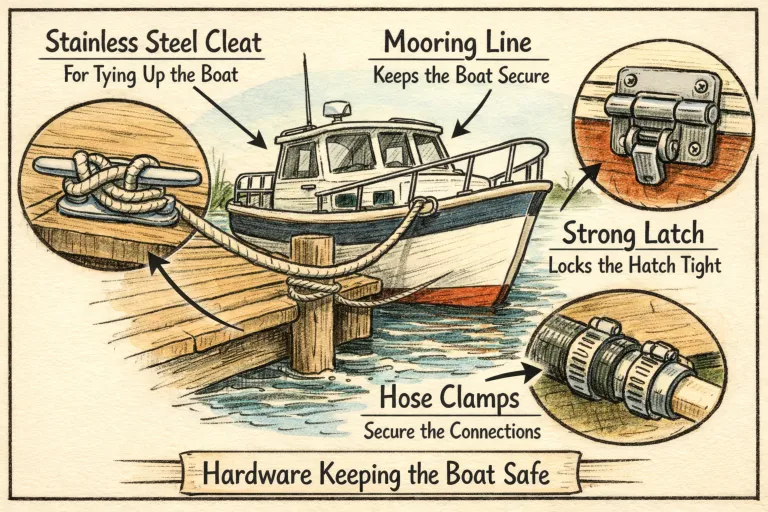
Marine hardware comes in a wide variety of configurations, each tailored for specific tasks onboard. The most common categories include:
-
Deck Hardware: This encompasses cleats, chocks, and bow eyes. These fittings are fundamental for mooring and docking, securing lines, and managing anchors.
-
Hinges and Latches: Used in compartments, doors, and hatches, these ensure tight closures that keep storage areas dry and secure, as well as convenient operation of all moving panels.
-
Fasteners and Screws: Fasteners hold the boat’s structure together and attach hardware to the deck, hull, or superstructure. They must be corrosion-resistant and sturdy, as failed fasteners could compromise a range of systems.
Each part must be carefully matched to your vessel’s specifications, taking into account load requirements, intended environment, and ease of maintenance. For a deeper dive into hardware options and best practices for applications, reference the BoatUS Marine Hardware Buyer’s Guide.
Material Selection for Marine Hardware
Equally important as the hardware’s type is the material from which it is made. The marine environment is unforgiving, making material science a key consideration when outfitting your boat. The most common materials include:
-
Stainless Steel: Grades such as 316 stainless steel are particularly preferred for saltwater environments due to their excellent corrosion resistance. They provide robust strength and longevity, ideal for load-bearing and critical safety applications.
-
Bronze: Bronze fittings are often chosen for underwater hardware because they resist corrosion from both seawater and galvanic reactions. They are preferred for propellers, through-hull fittings, and certain fastenings.
-
Nylon or Plastic: These lightweight, inexpensive options are ideal for non-structural marine parts. They are immune to rust but may lack the strength and UV resistance for heavy-duty or long-exposure applications.
The choice of material should always reflect the component’s specific purpose and the environment it will operate in. Using incompatible metals close together can cause galvanic corrosion, which is why understanding and selecting the appropriate materials is essential in marine maintenance.
Preventing Corrosion in Marine Hardware
Corrosion is a silent threat to all marine vessels, lurking in humid, salt-rich air. Combatting this requires a combination of diligent care and strategic product choices.
-
Always rinse hardware with fresh water after saltwater exposure, especially after every outing.
-
Apply protective coatings or corrosion inhibitors suitable for the target material. Some sprays and greases are formulated specifically for marine conditions.
-
Inspect hardware regularly for early signs of oxidation or pitting, and take immediate action if corrosion appears. This might involve cleaning, retreating, or outright replacement.
Staying ahead of corrosion keeps your boat’s systems in prime condition, reducing both risk and long-term costs.
Maintenance Tips for Marine Hardware
Scheduled maintenance is the foundation of hardware longevity. Boat owners should develop a checklist covering:
-
Systematic checks for wear, cracks, or movement in hardware, especially after heavy use or rough weather.
-
Lubricating hinges, latches, and moving metal connections to stave off rust and ensure smooth operation.
-
Immediate replacement of damaged or corroded hardware. Delays can amplify small problems into system-wide failures.
Additionally, keeping detailed records of hardware maintenance can guide future replacements and help track recurring issues, saving time and money in the long term.
Conclusion
Reliable marine hardware is the foundation of safety, performance, and longevity for any boat. Thoughtful selection and routine maintenance are the keys to avoiding unnecessary risks and costly repairs. With the correct knowledge and tools, boat owners can confidently equip their vessels for adventures that are as safe as they are enjoyable.