
Key Takeaways
-
Identifying the root causes of delays is crucial to crafting long-term solutions.
-
Commuters and businesses both bear significant economic and social costs from project delays.
-
Enhanced management practices and innovative construction methods are vital for timely completion.
-
Transparent, consistent engagement with the community builds trust and reduces frustration.
Table of Contents
-
Understanding the Causes of Road Construction Delays
-
Impact of Delays on Commuters and Businesses
-
Strategies for Efficient Project Management
-
Community Engagement and Communication
-
Adopting Innovative Construction Techniques
-
Case Study: Successful Road Construction Projects in Boston
-
Frequently Asked Questions
Road construction delays are a persistent challenge for Boston, MA, impacting daily life for residents and the city’s infrastructure planning. As roads form the backbone of urban mobility, efficient construction and minimal delays are essential for keeping Boston moving. Addressing this issue requires the collaboration of local governments, contractors, and residents, as well as the implementation of best practices across all project phases. Companies specializing in Road Construction Boston MA play a crucial role in developing and executing more efficient projects in the area.
Unique challenges in Boston arise from its dense urban environment, historical architecture, and unpredictable New England weather. These issues often lead to unforeseen complications, making proactive planning and responsive management essential. Construction on major thoroughfares can have ripple effects, creating delays and congestion that stretch for miles and last for weeks or even months.
While commuters are frequently impacted by extended travel times, businesses can also see significant economic setbacks. Road work near commercial areas can reduce customer access, often at critical times for retailers and restaurants. Beyond this, city officials must balance urgent infrastructure repairs with the short-term inconvenience these projects bring to residents and commuters.
Ongoing communication, strong project oversight, and a willingness to adopt new construction techniques help ensure projects finish on schedule and with minimal disruption. By learning from past delays and celebrating success stories, Boston can continue to make progress toward a more resilient and reliable roadway system.
Understanding the Causes of Road Construction Delays
Road construction delays in Boston often originate from several interconnected causes. One prevalent issue is the presence of unforeseen underground utilities, such as old gas lines or water pipes. These complications can stop a project until proper clearances and repairs are completed. Inclement weather also disrupts construction schedules, as heavy rainfall, snow, and freezing temperatures can halt outdoor work for days. Another source of delay is contractor-related problems, including bankruptcy or labor shortages, which can leave projects suspended as new teams are sourced and briefed.
For example, the Winter Street Bridge replacement in Waltham faced long pause periods after its contractor filed for bankruptcy. This led to increased costs and extended frustration for local commuters and city planners. Logistical challenges in Boston’s congested downtown areas further complicate scheduling and resource delivery, often blocking progress in ways not seen in less dense regions.
Impact of Delays on Commuters and Businesses
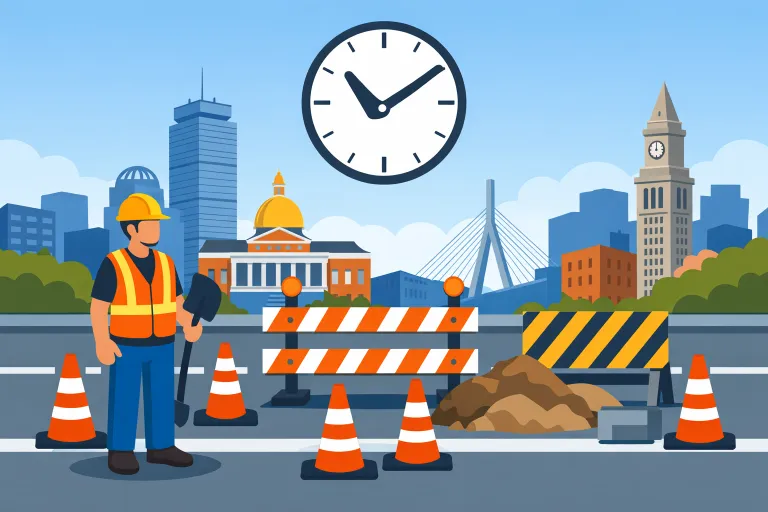
The impact of extended road construction is felt across the city’s economic and social framework. For commuters, traffic jams caused by construction can add hours to weekly commutes, increase fuel costs, and cause additional wear and tear on vehicles. The stress and loss in productivity also take a toll, with many Boston residents expressing frustration at stranded or poorly marked detours. Data from multiple local projects underscore the seriousness of the problem, with average commute times increasing by over 20 percent in some areas during periods of heavy construction.
Businesses situated near these construction zones face their own set of challenges. Reduced foot traffic, limited access, and decreases in visibility can result in as much as a 20 percent drop in sales, as seen during the Central Avenue Bridge closure in Framingham. Long construction projects may push some small businesses to close or relocate, weakening local economies and community ties.
Strategies for Efficient Project Management
Successful mitigation of road construction delays in Boston depends heavily on robust project management. Thorough planning must begin long before crews arrive on-site with advanced mapping to identify potential utility conflicts or infrastructure weaknesses. Regular progress monitoring and detailed scheduling help ensure accountability throughout each stage of the build.
Proactive risk management is fundamental as unexpected challenges frequently arise. The Massachusetts Department of Transportation has prioritized timely completion for all projects, targeting clear milestones and holding contractors to stricter standards. In 2014, only 67 percent of road construction projects in Massachusetts met their deadlines, amplifying the need for continued improvements within every aspect of project oversight. Strategies, such as adopting project management software and working closely with city planners, can streamline operations and minimize costly delays.
Community Engagement and Communication
Timely and transparent communication with the public is a cornerstone of successful construction projects. Residents tolerate disruptions more easily when informed early and clearly about project timelines, expected duration, and detour options. Signage must be conspicuous and updated frequently, especially in neighborhoods directly affected by long-term projects.
The City of Boston Public Works Department provides current updates and resources to keep residents informed about project status, road closures, and changes in traffic patterns. Digital platforms and community meetings create spaces for two-way feedback, allowing residents’ concerns to be addressed quickly and effectively. This active engagement helps maintain public trust and reduces the perception of arbitrary or unnecessary delays. Details and real-time updates about active projects can be found at the City of Boston Public Works Department.
Adopting Innovative Construction Techniques
Modern construction methods and materials present valuable opportunities for reducing timelines without compromising quality. Prefabrication enables contractors to build significant portions of a structure off-site, accelerating project schedules. Techniques such as accelerated bridge construction and night-time work shifts allow critical work to happen with minimal delays and reduced burden on daytime traffic.
The use of advanced traffic management strategies, much like those deployed during Boston’s Central Artery/Tunnel Project (Big Dig), helps mitigate major increases in congestion. Real-time data tracking tools, flexible work hours, and rapid-response teams all help keep projects moving along. Drawing on lessons learned from successful urban projects, Boston continues to integrate these practices to maximize efficiency and minimize inconvenience for everyone involved.
Case Study: Successful Road Construction Projects in Boston
Despite many challenges, Boston has completed several road projects on time and with minimal disruption. The Commonwealth Avenue reconstruction is one example, highlighting comprehensive management and consistent public engagement as keys to successful delivery. The combination of clear communication, strict deadlines, and community involvement ensured the timely completion of the project while enhancing accessibility and infrastructure reliability for all users.
The lessons drawn from these successful ventures allow city leaders and construction firms to replicate winning strategies in future projects throughout the Boston region.
Frequently Asked Questions
What are common causes of road construction delays in Boston?
Typical delays stem from unforeseen underground utilities, contractor issues, resource shortages, and poor weather conditions.
How do construction delays impact local businesses?
Delays limit customer access, decrease sales, and increase operational expenses, posing particular risks to small and local businesses located near project sites.
What strategies can be implemented to minimize construction delays?
Key methods include detailed project management, early community engagement, the use of innovative construction techniques, and ongoing public communication.
How can the public stay informed about road construction projects?
The City of Boston provides frequent digital and in-person updates regarding construction projects through the Public Works Department website and local information sessions.