
Table of Contents
-
Why Seasonal Care Matters
-
How Winter Weather Damages Asphalt
-
What to Check During a Spring Inspection
-
Summer Maintenance for Asphalt Surfaces
-
Fall Preparation Before Freezing Weather
-
The Role of Drainage in Pavement Life
-
When to Repair, Resurface, or Replace
-
A Simple Year-Round Maintenance Plan
-
Final Takeaway
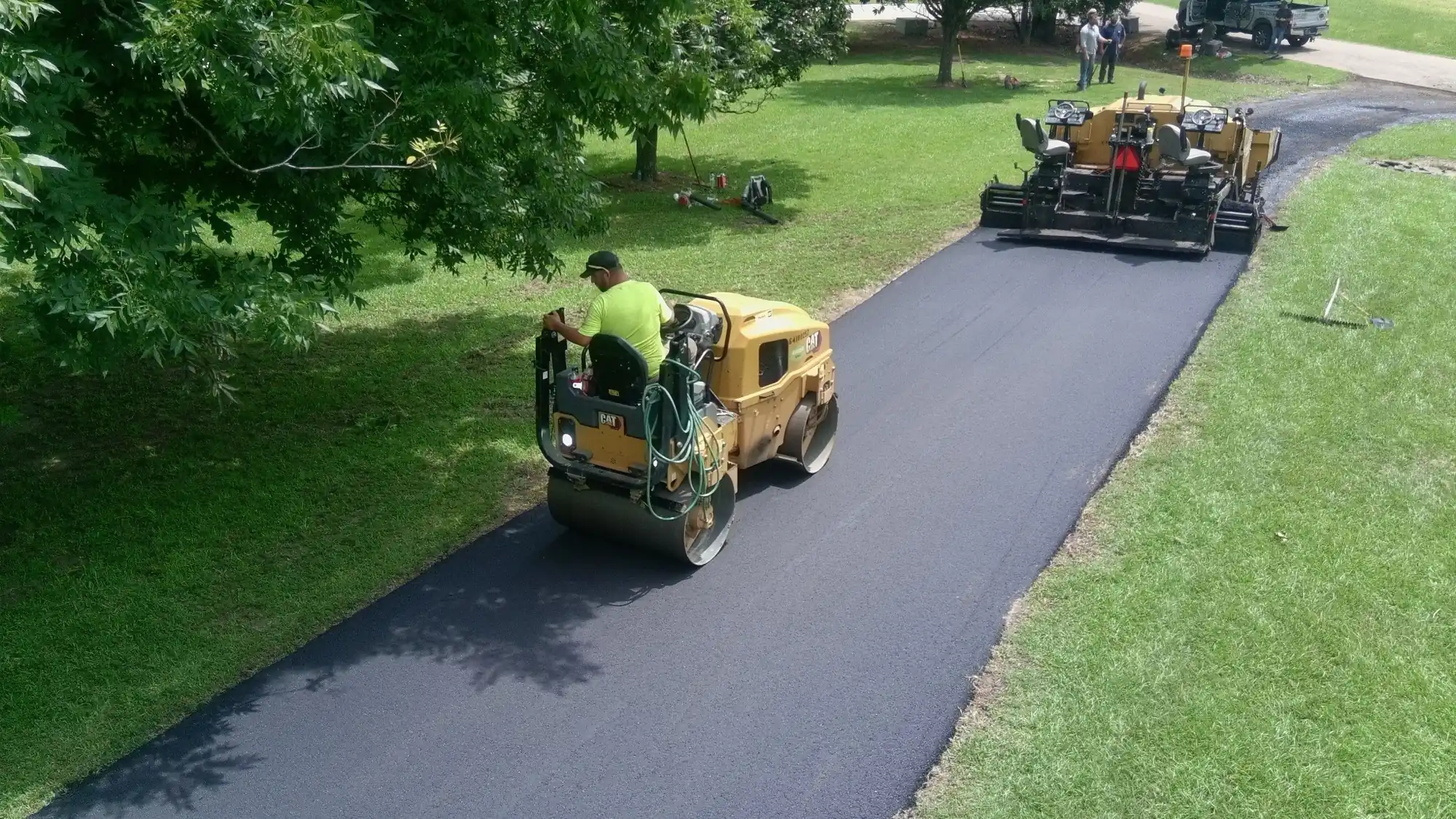
In Granger, Indiana, asphalt driveways and parking areas must handle wet spring weather, hot summer sun, falling leaves, winter snow removal, and repeated temperature swings. A seasonal plan gives homeowners, businesses, and property managers a practical way to spot trouble early, prioritize repairs, and protect the pavement’s usable life. Scheduling on-site paving estimates Granger IN, can also help property owners understand whether a concern calls for a small repair, a surface treatment, or more extensive work.
The main goal is simple: keep water from entering the pavement system and correct small defects before traffic worsens them. Asphalt is not maintenance-free, but consistent inspections and realistic repair decisions can help a driveway or parking lot remain safer, cleaner, and easier to use through every season.
Why Seasonal Care Matters
Waiting for a pothole is usually waiting too long. Small cracks, loose pavement edges, fading markings, and water that lingers after rain are easier to address when they first appear. If a narrow crack remains open during rain, snowmelt, and freezing conditions, moisture can migrate beneath the surface and weaken the support beneath the asphalt.
For example, a hairline crack noticed during a spring walk-through may only need timely crack treatment and monitoring. That same opening can widen after a season of water exposure and vehicle traffic, eventually becoming a broken section or pothole. Preventive maintenance is most effective when the pavement is still structurally sound, which is why reducing water infiltration through crack treatment remains an important pavement-maintenance principle.
How Winter Weather Damages Asphalt
Winter can be particularly hard on Granger-area pavement because water and changing temperatures work together. Water enters cracks and small surface openings, freezes and expands, then leaves behind weakened spaces when it melts. Vehicle weight can press the unsupported asphalt into those spaces, creating larger cracks, loose material, or potholes.
-
Freeze-thaw movement: Moisture below the surface can expand during freezing weather and reduce support after thawing.
-
Snow removal contact: Plow blades can catch raised cracks, broken edges, wheel stops, and uneven patches.
-
Trapped moisture: Snowmelt that cannot drain away may remain along edges or enter open defects.
-
Traffic on weakened areas: Delivery vehicles, garbage trucks, and daily parking traffic can accelerate a failure that began below the surface.
Property owners should use snow-removal practices that account for curbs, drains, and vulnerable edges. Indiana transportation guidance also recognizes the connection between winter freeze-thaw cycles, moisture in cracks, and pothole development. Its explanation of how surface treatments seal cracks and limit future deterioration provides a useful example of why preservation work is best completed before major structural problems develop.
What to Check During a Spring Inspection
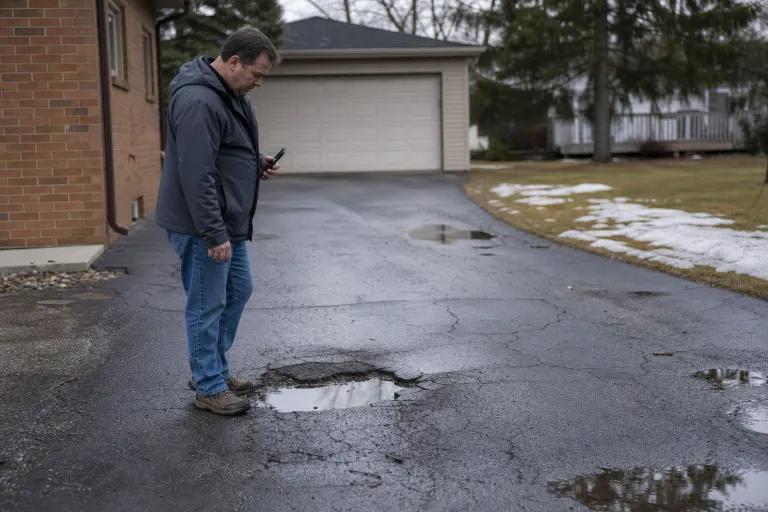
Spring is the right time to review what winter left behind. Walk the entire driveway or parking area after the surface is dry, then repeat the check after a normal rainfall. Take photos from the same locations each year so changes are easier to identify.
-
Look for new cracks, potholes, loose edges, and missing pavement material.
-
Watch for standing water, especially near downspouts, drains, entrances, and low spots.
-
Check for depressions, soft-feeling areas, or locations where vehicles seem to bounce or dip.
-
Inspect joints where asphalt meets concrete curbs, sidewalks, garage aprons, or utility covers.
-
Review parking stalls, drive lanes, pedestrian routes, and loading areas for safety hazards.
Narrow, isolated surface cracks do not always mean the pavement has failed. Wider cracking, repeated potholes, deep depressions, and interconnected alligator-style cracking are more serious signs because they can indicate a problem beneath the surface. A professional assessment can help distinguish a surface concern from a drainage or base failure.
Summer Maintenance for Asphalt Surfaces
Summer maintenance in Granger should focus on heat, traffic patterns, and water management. Warm asphalt can be more vulnerable where heavy vehicles turn sharply, brake repeatedly, or remain stationary for extended periods. Loading areas, dumpster pads, drive-thru lanes, and garage approaches deserve extra attention.
-
Clean oil and fuel spills promptly, following product directions and local disposal requirements.
-
Repair open cracks before summer storms carry water into the pavement structure.
-
Monitor ruts, tire scuffs, and depressions in high-traffic locations.
-
Refresh pavement markings when parking spaces, arrows, stop bars, or pedestrian areas become difficult to see.
-
Keep landscaping, gravel, and debris from spreading across the pavement edge.
Summer is also a good time to evaluate whether the surface is a candidate for preservation work. Treatments are not interchangeable, and a coating or overlay will not correct a weak base, poor slope, or failing drainage system. The condition of the pavement must guide the treatment.
Fall Preparation Before Freezing Weather
Fall preparation is about reducing the amount of water and debris that can remain on the pavement during winter. Before snow arrives, clear leaves from catch basins, gutters, curb lines, and pavement edges. Check that downspouts do not discharge directly onto a driveway or parking area.
-
Seal suitable cracks while weather conditions support the selected material.
-
Repair low areas where water consistently collects.
-
Trim vegetation that blocks drainage or presses against pavement edges.
-
Mark curbs, wheel stops, islands, and damaged areas so they are easier to see during snow removal.
-
Document unresolved issues so they can be monitored after the next thaw.
The Role of Drainage in Pavement Life
Many asphalt problems are water problems first. Even a well-installed surface can deteriorate faster when runoff pools at the edge, flows beneath the pavement, or repeatedly enters cracks. Before investing in patching, resurfacing, or a new overlay, identify where the water comes from and where it is supposed to go.
Common Drainage Warning Signs
-
Standing water that remains after ordinary rainfall.
-
Muddy or eroded soil beside the pavement.
-
Persistent green growth along cracks, joints, or edges.
-
Depressions near downspouts, drains, or driveway entrances.
-
Recurring pavement failures in the same location.
Check gutters, downspout extensions, catch basins, drainage swales, pavement slope, and the transition from asphalt to surrounding soil. Correcting the water source first can make the repair more durable and prevent a recurring patch problem.
When to Repair, Resurface, or Replace
The least expensive option is not always the best value. Match the response to the pavement condition:
-
Small, isolated cracks: Consider crack treatment and routine monitoring.
-
Several surface cracks with stable support below: Consider an appropriate preservation treatment or resurfacing evaluation.
-
Localized potholes or broken sections: Consider properly prepared patch repairs, including attention to the material beneath the damaged area.
-
Deep ruts, major settlement, widespread alligator cracking, or repeated failures: Request a structural repair or replacement review.
A patch can restore a localized area, but it cannot solve a hidden drainage issue or a weak base on its own. A clear diagnosis before work begins helps avoid spending money on a cosmetic fix that will fail too soon.
A Simple Year-Round Maintenance Plan
-
Spring: Inspect for winter damage, photograph defects, and note drainage concerns.
-
Early summer: Address cracks, spills, small patches, and visible surface wear.
-
Late summer: Review high-traffic areas, pavement markings, edges, and loading zones.
-
Fall: Clear drainage paths and complete suitable preventive repairs before winter.
-
Winter: Remove snow carefully, watch for new hazards, and record damage for spring review.
Records to Keep
-
Photos of damaged areas and drainage patterns.
-
Dates of inspections and completed repairs.
-
Notes about heavy traffic, construction activity, or utility work.
-
Details about drainage, grading, or downspout changes.
Final Takeaway
For Granger property owners, longer-lasting asphalt starts with a steady seasonal routine. Inspect the surface, keep drainage paths clear, address cracks before winter, and choose repairs that match the pavement’s actual condition. Small actions taken throughout 2026 can help prevent water, traffic, and temperature changes from turning manageable defects into major pavement failures.