
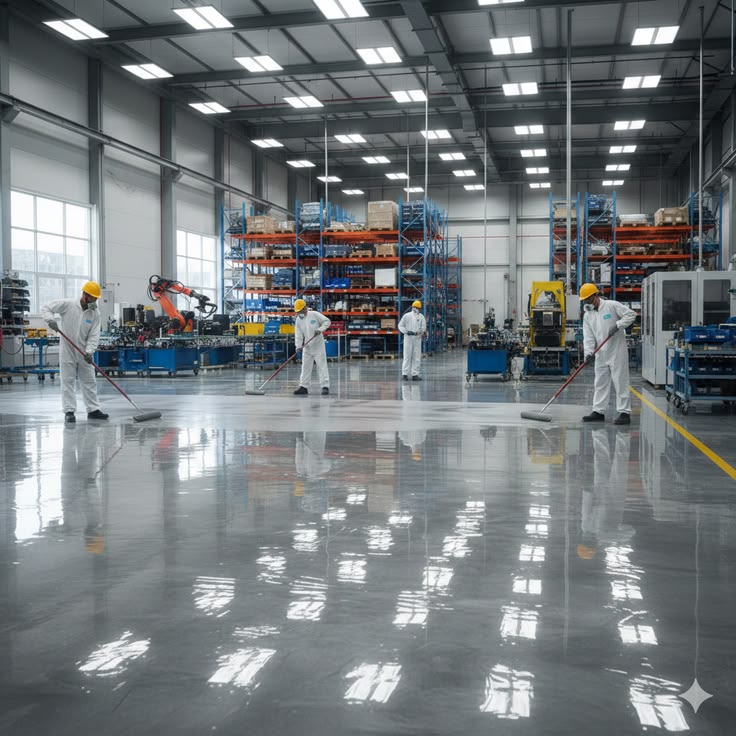
Industrial environments place very different demands on flooring than ordinary residential spaces. Heavy equipment, forklifts, machinery, chemicals, constant movement, and frequent cleaning can put considerable pressure on a concrete floor. A suitable flooring system needs to support the way a facility operates while remaining practical to maintain. Industrial epoxy flooring Corona CA, is designed for demanding environments where durability, surface protection, and dependable performance are important. The right system can help businesses create a floor that fits the operational needs of warehouses, workshops, hangars, and other industrial facilities.
Understanding Industrial Flooring Demands
Industrial floors often experience continuous traffic throughout the working day. Equipment may move across the surface repeatedly, while dropped tools, spills, and heavy loads can create additional challenges. Evolve Epoxy describes industrial epoxy as suitable for environments involving heavy traffic and machinery, with systems designed around durability and resistance. This makes the flooring selection an important part of facility planning rather than something that should be considered only after the existing concrete becomes visibly worn.
Supporting Heavy Traffic Areas
Warehouses and storage facilities need surfaces that can cope with constant movement. Forklifts, carts, pallets, and other equipment can place repeated stress on concrete. A properly selected epoxy system provides a hard-wearing finished surface designed for demanding use. Evolve Epoxy notes that its industrial coatings are customizable for different pressures, including those created by heavy machinery. Businesses should consider traffic patterns, equipment weight, turning areas, and maintenance routines when determining what type of industrial floor system makes sense for their facility.
Chemical and Spill Resistance
Industrial facilities may encounter oils, cleaners, lubricants, fuels, and other substances that can affect untreated concrete. The flooring system therefore needs to be selected with the working environment in mind. Certain epoxy systems can provide resistance against various chemicals and fluids, helping protect the underlying concrete from everyday industrial exposure. Evolve Epoxy specifically highlights applications for aircraft hangars where floors may encounter aviation fuels, cleaners, waxes, lubricants, and corrosive liquids. The specific coating should always match the substances present at the facility.
Safety and Workplace Movement
Flooring also contributes to how comfortably and safely people move through a workplace. Uneven areas, damaged concrete, or unsuitable surface textures can create unnecessary challenges for employees and equipment operators. Epoxy systems can incorporate textures and finishes intended to support traction. Evolve Epoxy lists slip resistance among the characteristics of its industrial epoxy floors. Businesses should still consider the particular conditions of their facility, including moisture, cleaning practices, footwear, drainage, and areas where spills may occur.
Why Surface Preparation Matters
Even a high-performance coating depends on the condition of the concrete underneath it. Surface preparation removes contaminants and creates a suitable profile for coating adhesion. Evolve Epoxy’s industrial installation process includes diamond grinding to remove stains, dirt, grime, and oil, followed by cleaning and repairs to cracks, divots, and holes. The process then includes an epoxy primer or base coat before the selected flooring system and topcoat are installed. This preparation stage should never be treated as an optional cosmetic step.
Choosing the Right Industrial System
Different industrial facilities have different requirements, so the best flooring solution depends on the environment. A warehouse may prioritize resistance to heavy traffic, while an aircraft hangar may need greater resistance to fuels and chemicals. Manufacturing areas can have different requirements, especially where machinery, oils, and cleaning processes are involved. Industrial epoxy flooring Corona can be considered for these demanding applications because epoxy systems can be customized according to the conditions they need to handle. The facility’s daily operations should guide the final selection.
Maintenance and Long-Term Value
Floor maintenance becomes easier when the surface is designed around the facility’s actual operating conditions. A seamless epoxy surface can simplify cleaning because there are fewer joints and gaps where dirt can collect. Evolve Epoxy also highlights the maintenance advantages of its industrial systems, describing them as easy to clean and economical to maintain. Regular cleaning schedules should still be established according to traffic levels and the materials handled within the facility.
Considering Downtime During Installation
Industrial flooring projects need careful scheduling because businesses cannot always stop operations for extended periods. Installation plans should account for preparation, coating application, curing, and the time required before foot or vehicle traffic can resume. Evolve Epoxy states that its polyaspartic topcoat is quick-drying, allowing foot traffic in approximately eight hours and vehicle return to service in as little as forty-eight hours. Actual project timelines can vary based on site conditions and the flooring system selected.
Conclusion
Industrial facilities need flooring that supports demanding daily operations without becoming an unnecessary maintenance concern. Industrial epoxy flooring in Corona, CA can provide a durable, practical surface for environments exposed to heavy traffic, machinery, spills, and regular cleaning. Industrial epoxy flooring in Corona can also be selected according to the specific conditions found within warehouses, workshops, and specialized facilities. Evolveepoxy.com offers industrial flooring systems with preparation and coating processes designed for demanding applications. Businesses should assess traffic, chemical exposure, safety needs, maintenance routines, and installation schedules before selecting their flooring solution.