
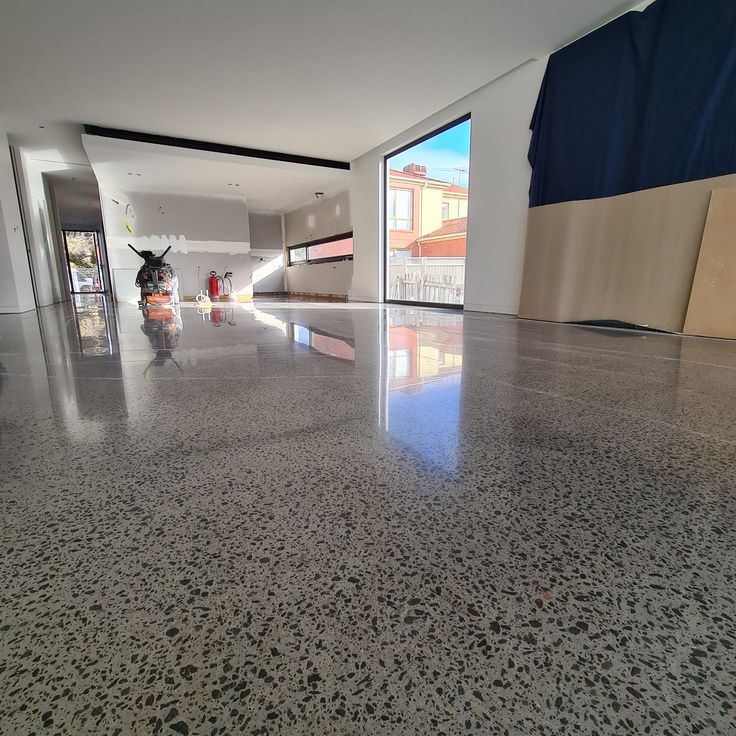
Concrete no longer has to remain hidden beneath carpet, tile, or another floor covering. With the right preparation and finishing process, polished concrete can turn an ordinary slab into a clean, durable surface suited to homes, retail areas, offices, and other busy environments.
Property owners comparing concrete finishing options should look beyond appearance alone. Slab condition, traffic, maintenance expectations, exposure, and the way the room is used should all influence the final approach.
Start With the Condition of the Existing Slab
Every concrete floor has its own history. Some slabs are relatively smooth, while others contain cracks, stains, patches, glue residue, uneven areas, or marks left by previous flooring.
Before any finishing work begins, those conditions should be evaluated. Concrete sealing may also be considered where the goal is to help protect a concrete surface and make ongoing care more manageable without completely changing the character of the slab.
Surface evaluation matters because the final appearance depends heavily on what is already there. Existing variations may remain visible and can even become part of the finished industrial-style look.
Understand What Polishing Actually Changes
Concrete polishing is a mechanical process rather than simply applying a glossy coating over the floor. Specialized grinding and polishing equipment is used to refine the surface progressively.
The amount of grinding can influence the appearance. Some projects keep more of the original surface character, while others expose more aggregate within the slab.
This makes planning important. Property owners should discuss the desired level of sheen and overall visual effect before the work begins.
Think About the Room’s Daily Activity
A floor in a quiet basement does not face the same demands as one in a retail space or active commercial environment. Foot traffic, furniture, carts, dirt, and cleaning frequency should all be considered.
Finished concrete works particularly well in spaces where owners want a hard surface without grout lines or soft flooring materials. Its simple appearance can also suit contemporary, industrial, and minimalist interiors.
However, every room has different requirements. The flooring choice should support those requirements rather than being selected because of appearance alone.
Natural Variation Is Part of the Look
Unlike manufactured flooring, existing concrete is rarely completely uniform. Repairs, aggregate, color variation, and marks within the slab can become visible during the finishing process.
For many people, this is part of the appeal. The floor develops a character that is specific to that particular slab rather than looking exactly like a factory-produced product.
Anyone expecting perfectly identical color from wall to wall should discuss that expectation early. Understanding natural variation can prevent disappointment after installation.
Preparation Still Determines Quality
Good finishing begins with good preparation. Old adhesives, coatings, contaminants, or damaged material may need to be removed before the concrete can be properly worked.
Cracks and defects may also require repair. While repairs can improve the condition of the floor, they may not become completely invisible after polishing.
A professional assessment helps determine which imperfections can be corrected and which may remain visible as part of the finished surface.
Consider Cleaning and Maintenance
One advantage of a finished concrete floor is its relatively straightforward cleaning routine. Dust and loose debris can be removed regularly, while appropriate cleaning methods can handle normal dirt and spills.
Still, low maintenance does not mean no maintenance. Abrasive dirt should not be allowed to build up, and spills are generally easier to manage when addressed promptly.
Property owners should also ask which cleaning products are suitable for the particular finish installed.
Think Beyond Interior Appearance
Concrete finishing decisions can also affect how adjoining areas feel. A polished interior floor may connect visually with garages, workshops, entry areas, or other concrete surfaces around the property.
Using related finishes can create a more consistent design without making every space identical. The level of sheen or treatment can still vary according to each area’s purpose.
This approach works particularly well when practical surfaces are part of the overall architectural style.
Choose the Finish Around Long-Term Use
A flooring project should make sense several years after installation, not only on the day it is completed. Traffic levels, cleaning habits, furniture movement, and future use of the room all deserve consideration.
It is also worth discussing repair options and future maintenance before choosing a finish. Knowing what care may be needed helps owners make a more realistic decision.
Conclusion
Finished concrete can combine simplicity, durability, and visual character when the existing slab is suitable for the project. The strongest results come from evaluating the concrete, preparing it carefully, understanding natural variation, and selecting the finish around actual daily use.
Property owners comparing concrete finishing options can explore relevant services through avid-epoxy.com. Beginning with the condition of the slab can make it easier to choose a finish that remains practical over the long term.